The stage
Athens and the birth of theatre
How Athens became the centre of ancient Greek theatre: the festival of Dionysus, the stone theatre below the Acropolis, the plays, the masks and the myths.
Reserve a table for the evening ↗Quick answer
Athens was the centre of theatre in ancient Greece. Plays were staged there at the City Dionysia, a festival honouring the god Dionysus, and tragedy, comedy and the satyr play all emerged in the city. The Theatre of Dionysus on the south slope of the Acropolis became a stone theatre in the fourth century BC, and its ruins can still be seen.
Where it began
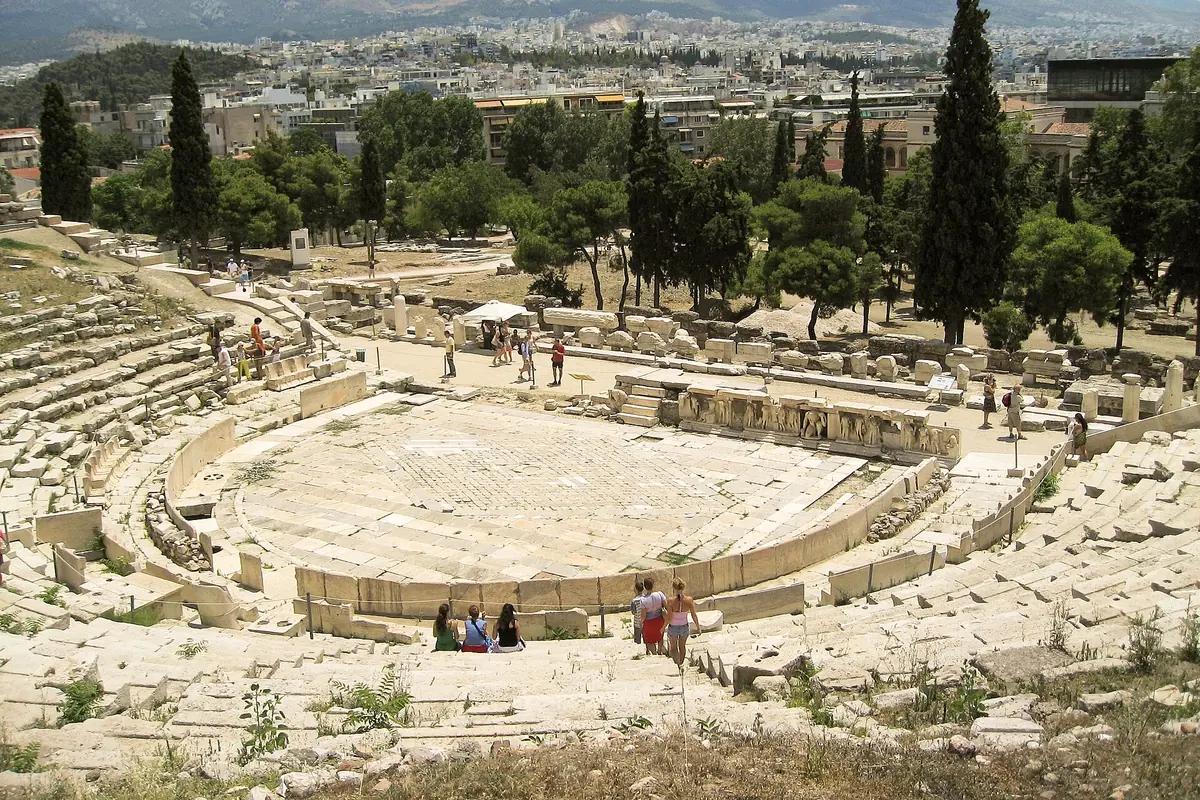
According to Wikipedia, Athens was the centre of theatre in ancient Greece, and theatre was institutionalised there as part of the City Dionysia, a festival honouring the god Dionysus. Tragedy, comedy and the satyr play all emerged in the city, and tragedy and comedy were kept as separate genres. Thespis is recorded as the earliest actor and the winner of the first theatrical contest, and is often called the inventor of tragedy, although his importance is disputed. The festival was a competition, so what we now call a play first existed as an entry in a contest between playwrights.
The Theatre of Dionysus
The theatre stands on the south slope of the Acropolis and was part of the sanctuary of Dionysus Eleuthereus. Wikipedia dates the first orchestra terrace to the middle or late sixth century BC. Dramatic performances probably began in the Agora and had moved to the Acropolis sanctuary by 499 or 496 BC. Under the statesman Lycurgus the theatre was rebuilt in stone and reached its fullest extent in the fourth century BC. Estimates of how many it held vary a good deal, from about 14,000 to 17,000 to much higher figures.
What was staged
At the Dionysia, three tragic playwrights each submitted three tragedies and a satyr play, and comedy was added to the competition from 486 BC. Aeschylus is said to have added a second actor and Sophocles a third, and playwrights never used more than three. Only men acted, and they played the female roles. A chorus of usually twelve to fifteen performed in the orchestra, led by a chorus leader. Masks were central: the chorus wore a shared mask, and masks let actors switch roles quickly and show age, sex and status. With at most three actors on stage, one performer often played several parts, which is one reason masks mattered so much to how a play was understood.
Myth as raw material
Tragedies drew on mythological subjects, and satyr plays treated the same myths comically. The Odyssey, an epic attributed to Homer in 24 books, has long been one such source: it follows Odysseus on his long voyage home from the Trojan War and gives audiences the Cyclops Polyphemus, Circe and the Sirens. Wikipedia places its composition around the eighth or seventh century BC and says it developed in an oral tradition. Telling myths aloud to a gathered audience is the habit that Athenian theatre began with.
Read next: Athens theatre evenings compared
The ruins today
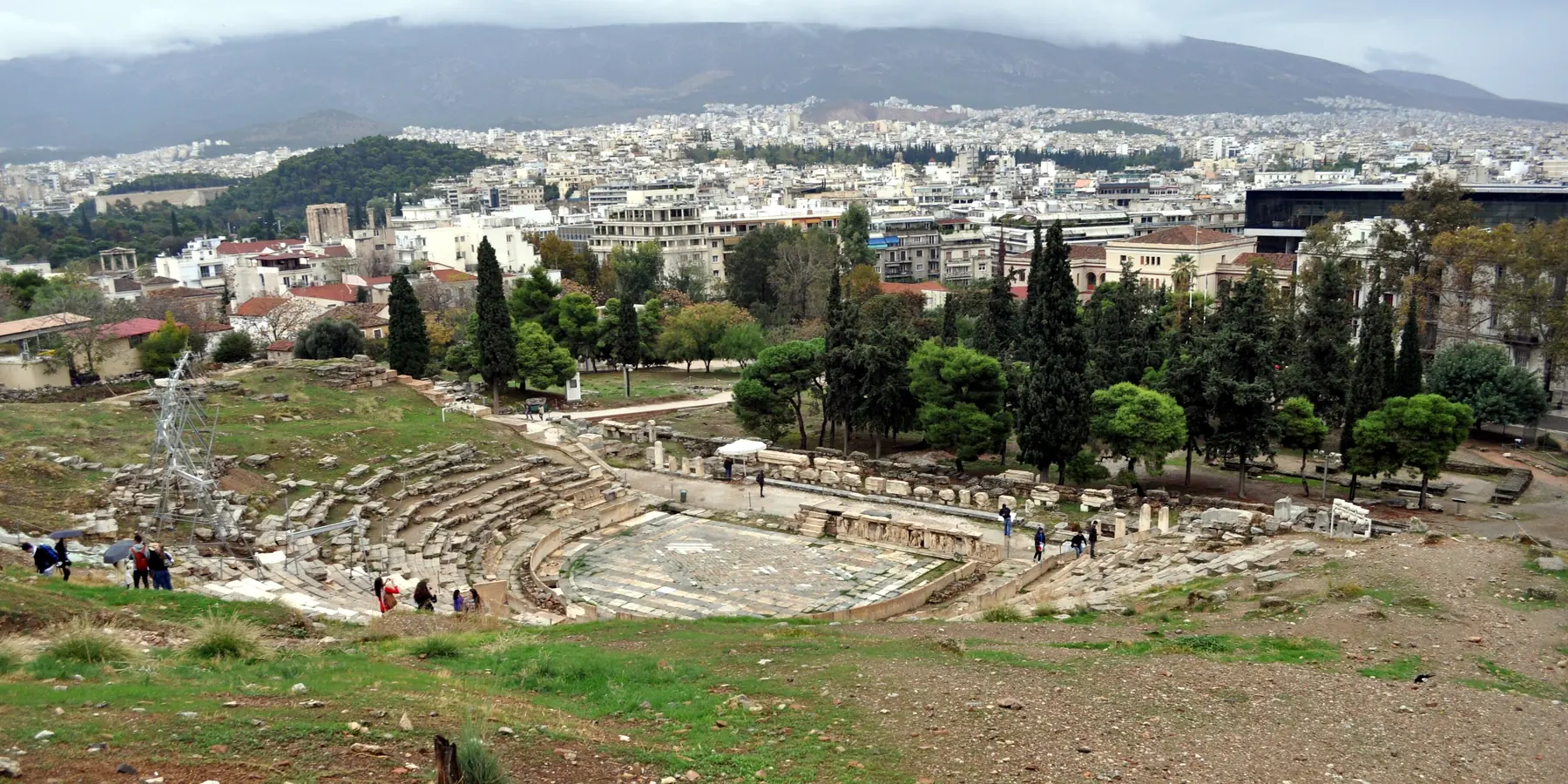
After the fifth century AD the theatre was abandoned. Its orchestra became the courtyard of a basilica and its seating area was used as a stone quarry. Excavation began in the nineteenth century, and today the partly preserved front-row stone seats can be seen on the slope below the Acropolis wall. Visiting the ruins is a separate outing from any evening show, so check the archaeological site's own hours and ticketing, which this guide does not cover. The Acropolis rises directly above, so the theatre is easy to place when you see the hill from the streets of Athens.
How a dinner theatre fits
A dinner at which actors play regional characters is not ancient drama, and nobody claims it is. It belongs to a modern kind of interactive staging. The organiser argues that the difference between a dinner show and its kind of theatre is agency: guests are given a role in the story instead of sitting and eating. Whether that matches your taste is the question to ask before booking. The booking guide explains how the evening runs, and the comparison guide sets it against two other theatre evenings in Athens.
Read next: Athens dinner theatre: how to book
Frequently asked questions
Where did Greek theatre begin?
In Athens, as part of the City Dionysia, a festival honouring the god Dionysus.
Who was Thespis?
The earliest recorded actor and winner of the first theatrical contest, often called the inventor of tragedy, though scholars dispute his importance.
Can I visit the ancient theatre?
Yes. Its ruins lie on the south slope of the Acropolis. Check the site's own hours before you go; it is a separate outing from any evening show.
Sources